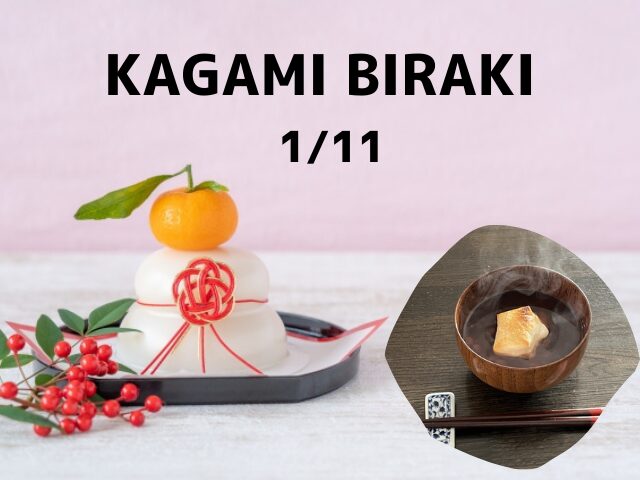
Kagami Biraki is a Japanese New Year custom in which people eat kagami mochi that has been offered to the New Year deity.
By consuming the mochi believed to hold divine blessings, people wish for health and good fortune, quietly marking the end of the New Year season.
What Is Kagami Biraki?
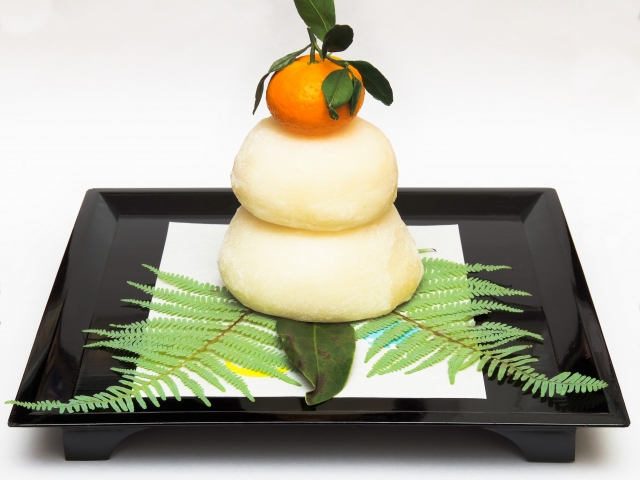
Kagami Biraki is the custom of eating kagami mochi that was displayed during the New Year period.
The mochi is first offered to Toshigami, the deity believed to visit households at the start of the year. After the New Year celebrations end, the mochi is taken down and eaten to receive the deity’s power and wish for health, safety, and happiness throughout the year.
It is not simply a matter of food preparation. Eating the mochi completes the New Year ritual.
When Does Kagami Biraki Take Place?
In most regions of Japan, Kagami Biraki is observed on January 11, though the date can vary by region and tradition.
- New Year decorations are removed
- Ordinary routines have resumed
- The festive period has clearly ended
Kagami Biraki marks this transition in a quiet, symbolic way.
Why Is It Called “Opening” Instead of “Breaking”?
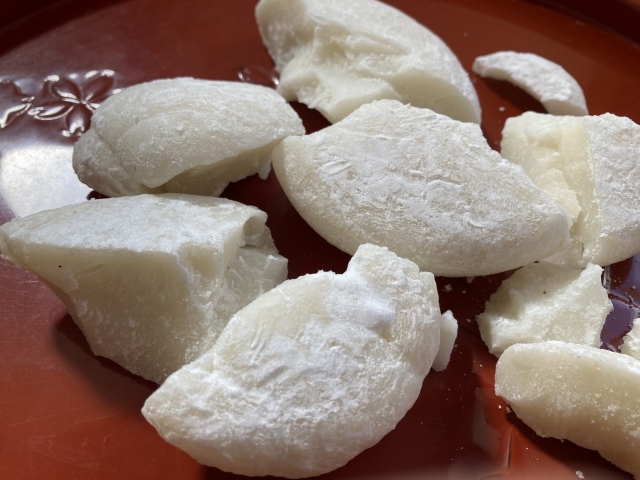
Although the hardened mochi must be physically broken, the act is traditionally described as “opening,” not “breaking.”
In Japanese culture, words carry symbolic weight, and negative expressions are often avoided in rituals. For this reason:
- “Breaking” can sound unlucky or destructive
- “Opening” suggests harmony, continuity, and good fortune
The choice of words reflects a belief that language itself shapes fortune.
Why Are Knives Not Used?

Because kagami mochi is an offering, using a knife is traditionally avoided.
Cutting can imply severing luck or showing disrespect toward a sacred offering. Instead, the mochi is:
- Broken by hand
- Or cracked using a wooden mallet
Modern Reality: Packaged Kagami Mochi and Convenience
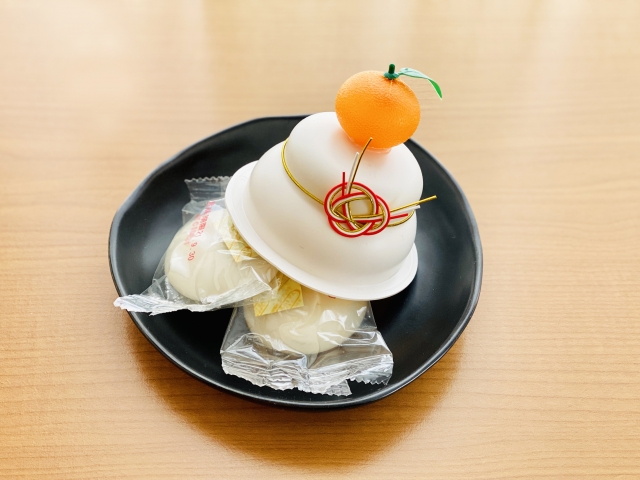
Most modern households no longer follow the traditional method strictly.
Today, kagami mochi is often sold in a plastic pouch shaped like the traditional stacked mochi. Many products also contain individually wrapped, pre-cut mochi inside.
Because of this, many families simply open the package—or, for convenience, cut the mochi with a kitchen knife. Using a wooden mallet is now rare, even in rural areas.
In modern practice, what matters is not the exact method of preparation, but the intention of eating the mochi and wishing for health and good fortune.
Why Do People Eat the Mochi?
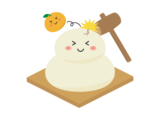
According to traditional belief, Toshigami resides in the kagami mochi during the New Year.
By eating it, people:
- Receive the deity’s strength
- Share blessings among family members
- Pray for a year of good health and good fortune
The ritual does not end with decoration—it ends with consumption.
How Is Kagami Mochi Usually Eaten?
Traditionally made kagami mochi is dried until most of its moisture is gone, making it hard enough to crack rather than cut. Before eating, it often needs to be soaked in water for several hours to rehydrate.
Modern kagami mochi, however, is usually sold in sealed plastic packaging or as individually wrapped pieces, making it ready to eat as soon as it is opened.
Once prepared, kagami mochi is commonly enjoyed in the following dishes.
Oshiruko
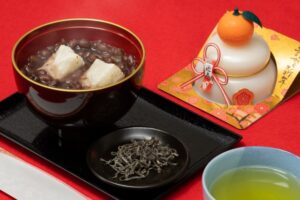
A sweet red bean soup with softened mochi, often eaten in winter as a warming dessert.
Ozōni
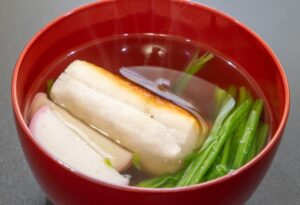
A traditional New Year soup made with mochi, vegetables, and broth, with regional variations across Japan.
Aged Mochi
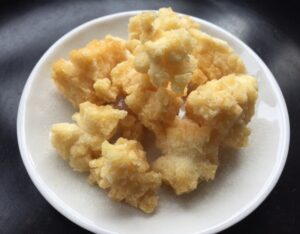
Mochi that is fried until crisp on the outside and soft inside, commonly eaten as a simple snack.
Kagami Biraki as Food Culture
Kagami Biraki reveals an important aspect of Japanese food culture:
Sacred offerings are not discarded—they are eaten.
By consuming what was once offered to a deity, people bring the sacred back into everyday life. Food becomes the bridge between ritual and reality.
Although the custom has Shinto roots, most modern Japanese people view Kagami Biraki as cultural rather than religious.
Some households observe it carefully, while others approach it casually or skip it altogether. Its survival depends on flexibility, not strict rules.
FAQ About Kagami Biraki

What is the purpose of Kagami Biraki?
To receive the blessings believed to reside in the kagami mochi and to wish for health and happiness in the coming year.
Why is January 11 common for Kagami Biraki?
It traditionally marks the end of the New Year period, though dates vary by region.
Is it bad luck to cut kagami mochi?
Traditionally, knives are avoided due to their negative symbolism. In modern households, many people prioritize convenience, focusing on the meaning of eating the mochi rather than the exact method of preparation.
What happens if you don’t do Kagami Biraki?
Nothing serious. Many people skip it today without concern.
Why Kagami Biraki Still Matters
Kagami Biraki is not a grand ceremony. It is a quiet conclusion.
By eating the mochi that once symbolized divine presence, people gently close the New Year season and return to ordinary life—one final act of respect before moving on.

