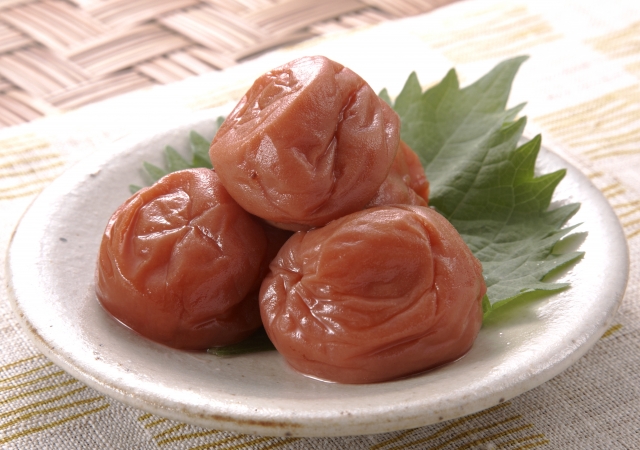
Umeboshi is a traditional Japanese preserved food made by salting and sun-drying ume plums.
Known for its intense sourness and saltiness, it has long been valued not only as food, but as a practical ingredient that balances flavor, preserves meals, and supports everyday eating in Japan.
What Is Umeboshi?
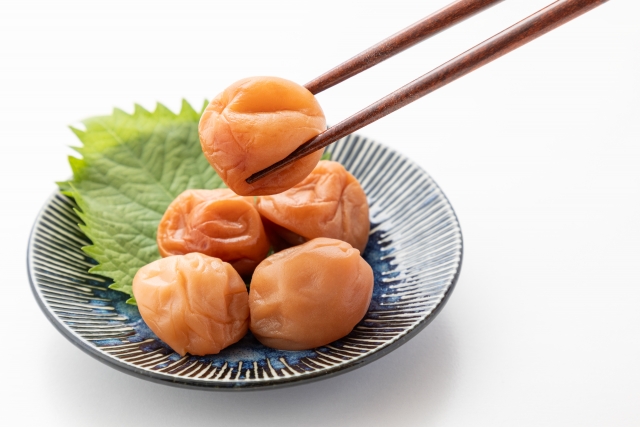
Umeboshi is a Japanese pickled plum made by fermenting ume plums with salt and drying them under the sun.
Although ume is a fruit, it cannot be eaten raw. Through salting, fermentation, and sun-drying, it becomes a preserved food with a sharp flavor and long shelf life.
The result is a food that is:
- Extremely sour
- Distinctly salty
- Meant to be eaten in small amounts
Why Does Umeboshi Taste So Strong?

For many first-time eaters, umeboshi can be shocking.
The moment it touches your tongue, the sourness spreads instantly and triggers a rush of saliva. This reaction is so strong that, once experienced, even seeing umeboshi later can cause the same response.
In Japan, this intensity is not considered a flaw. It is the defining characteristic.
How Umeboshi Is Traditionally Made
Salting the Plums
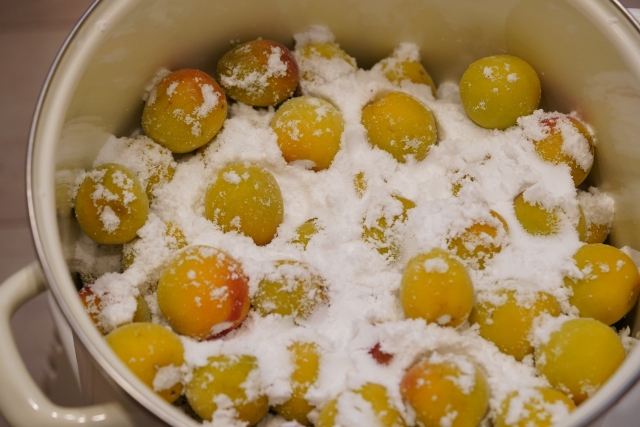
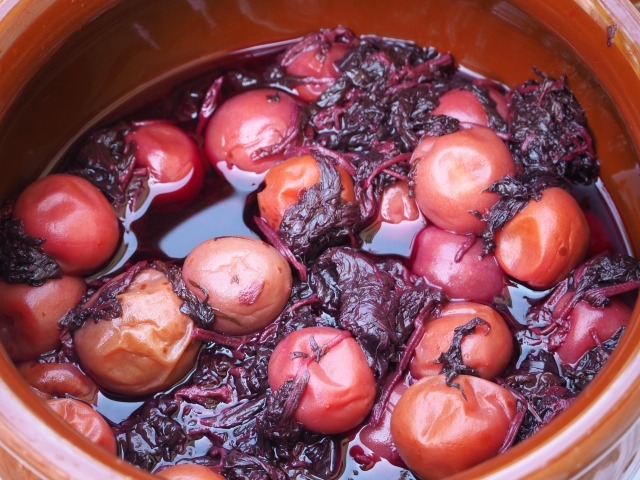
Salt draws moisture from ume plums and creates umezu (plum vinegar), the base of umeboshi’s sharp flavor.
Firm ume plums harvested in early summer are heavily salted. As moisture is drawn out, it forms a liquid known as umezu, or plum vinegar.
This naturally produced liquid is rich in salt and acidity and plays an important role in preserving the plums and shaping umeboshi’s sharp flavor.
Fermentation and Sun-Drying
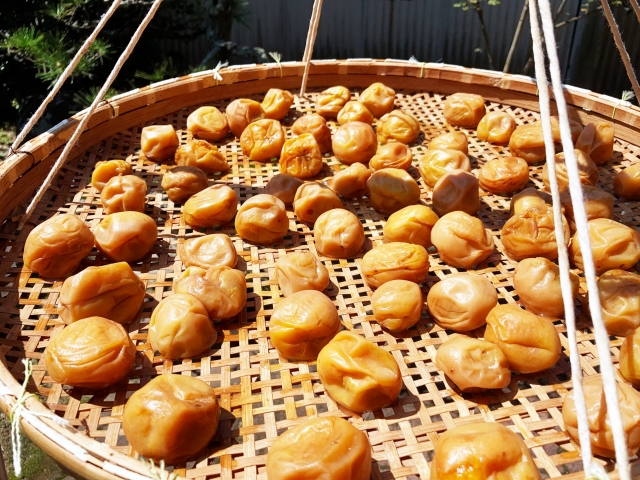
Sun-drying concentrates sourness and saltiness—this step is what turns salted ume into umeboshi.
The plums remain submerged in umezu as fermentation progresses. They are then dried under direct sunlight for several days, concentrating both sourness and saltiness.
This simple process—plums, salt, sun, and time—has remained largely unchanged for centuries.
Umeboshi as a Preservation Food
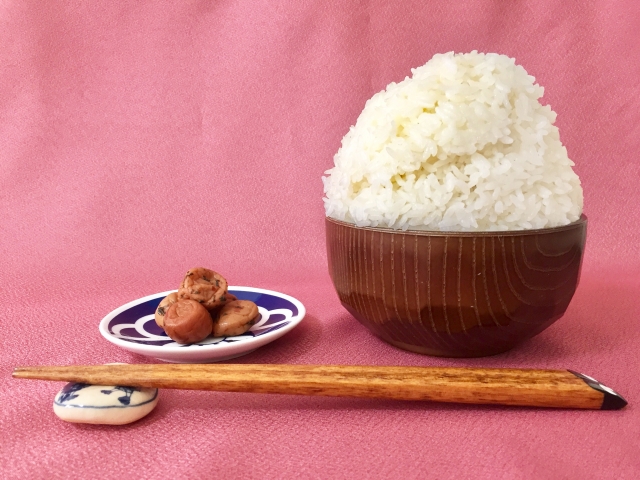
meboshi is rarely eaten alone—its role is to add contrast to plain rice.
Before refrigeration, umeboshi played a crucial role in everyday Japanese life.
Its high salt content and strong acidity helped prevent spoilage, while its powerful flavor allowed small amounts to season plain meals such as rice.
Historically, umeboshi was carried as a functional food rather than a luxury, valued for its durability and impact.
Umeboshi and Everyday Health Beliefs
Umeboshi contains organic acids such as citric acid, which contribute to its sharp taste.
In traditional thinking, umeboshi was believed to help refresh the body, stimulate appetite, and support digestion. Rather than being treated as medicine, it was seen as food that helps maintain balance in daily meals.
Is Umeboshi Too Salty?

One clear drawback of umeboshi is its high salt content.
Traditional umeboshi is intentionally very salty and should never be eaten in large quantities. However, this intensity is also what makes umeboshi useful in cooking.
Because of its strong saltiness and acidity:
- Only a small amount is needed
- It can replace other seasonings
- It pairs naturally with simple ingredients
Rather than avoiding saltiness, Japanese cooking balances it through moderation and smart use.
How Umeboshi Is Used in Everyday Cooking
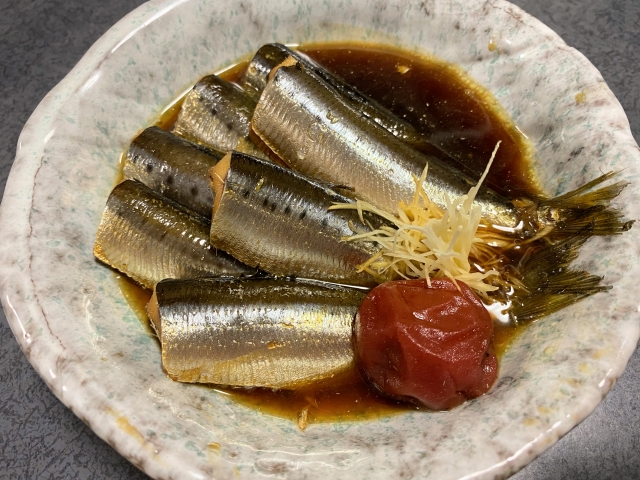
Caption: Umeboshi is often used in cooking, such as simmered sardines (iwashi no ume-ni), to lighten rich flavors and reduce fishy odors.
In Japanese home kitchens, umeboshi is often used as an ingredient rather than eaten on its own.
For example:
- Umeboshi is added when simmering fish to reduce oiliness and unwanted odors.
- Ume paste is mixed into pasta or sauces to add brightness and acidity.
- Chopped umeboshi is commonly tossed with cucumbers, where its saltiness means no additional salt is needed.
In these uses, umeboshi helps rich or oily foods feel lighter and cleaner, even in very small amounts.
Why Umeboshi Is Always Eaten With Rice
Umeboshi is rarely eaten alone.
Its role is to cut through the blandness of rice, adding contrast rather than volume. This pairing reflects a core idea in Japanese food culture: strong flavors exist to support simple staples, not overpower them.
Encountering Umeboshi in Japan Today
Most people encounter umeboshi in everyday settings such as rice balls, breakfast side dishes, or traditional meals.
In these contexts, umeboshi is not the main dish. It is a small but intentional accent that completes the meal.
Why Umeboshi Still Matters
Umeboshi is not meant to be easy.
Its sharpness reflects a culture shaped by preservation, contrast, and restraint. Understanding umeboshi helps explain why Japanese cuisine values balance over excess.
FAQ About Umeboshi

What is umeboshi?
Umeboshi is a Japanese pickled plum made by salting ume plums, letting them ferment in brine, and then sun-drying them. The result is an intensely sour and salty preserved food.
What is umezu (plum vinegar)?
Umezu is the liquid that forms when ume plums are salted. It is naturally rich in salt and acidity and helps preserve the plums while shaping umeboshi’s sharp flavor.
Why does umeboshi taste so strong?
Umeboshi is meant to be intensely sour and salty. For many people, the sourness triggers a rush of saliva, and the reaction can be strong enough that even seeing umeboshi later brings the sensation back.
Is umeboshi too salty?
Traditional umeboshi can be very salty and should not be eaten in large quantities. In Japanese cooking, it is typically used in small amounts, where its saltiness and acidity can replace other seasonings.
How is umeboshi used in everyday cooking?
Umeboshi is often used as an ingredient: added to simmered fish to reduce oiliness and unwanted odors, mixed into sauces or pasta for brightness, or chopped and tossed with cucumbers—often without needing extra salt.
Why is umeboshi usually eaten with rice?
Umeboshi is rarely eaten alone. Its role is to add contrast to plain rice, supporting simple staples rather than overpowering them.
Where can I try umeboshi in Japan?
You can often find umeboshi in rice balls (onigiri), as a breakfast side dish, or in traditional set meals. In these settings, it is usually served as a small accent to complete the meal.
Final Thoughts
Umeboshi is more than a pickled plum.
It is a food shaped by necessity, environment, and taste memory—one that continues to define how Japan approaches flavor, preservation, and everyday eating.
Author’s Note
I grew up in Japan, and umeboshi has always felt less like a “health food” and more like a practical part of everyday eating—something small that changes the balance of a meal.
Writing for YUNOMI, my goal is to translate these ordinary food habits into cultural context, so they make sense beyond Japan without losing their nuance.

