
A genkan is not just an entryway. It is a threshold.
In Japanese homes, the genkan marks a clear boundary between the outside world and the protected interior.
Removing shoes here is more than a matter of cleanliness or etiquette. It is a small ritual that signals a shift from public life to private life.
To understand the genkan is to understand how Japanese homes use space to shape behavior, mindset, and daily rhythm.
Part of the Japanese Home & Interior Culture cluster.
Quick Summary
- A genkan is the entry space that separates outside from inside.
- It creates a clear physical and psychological boundary.
- Removing shoes functions as a ritual of transition.
- The genkan helps maintain cleanliness, order, and respect for interior space.
- It reflects a broader Japanese preference for clear boundaries and mindful transitions.
More Than an Entryway
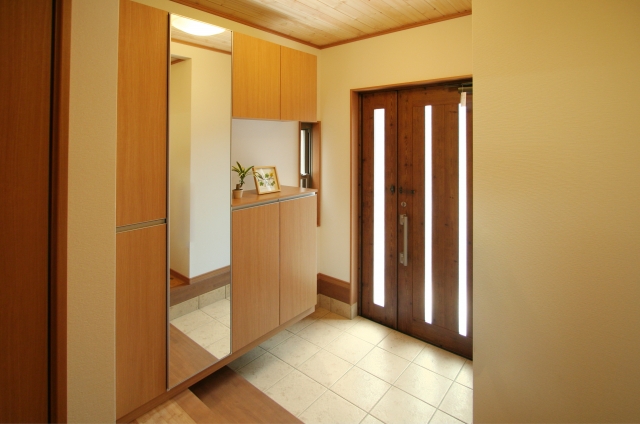
The genkan is the recessed entry space found in most Japanese homes.
It typically includes a lower floor area where shoes are removed and a raised interior floor that marks the beginning of the home proper.
Architecturally, it can seem like a minor detail.
Culturally, it carries much greater meaning.
The genkan is not simply where people enter.
It is where people pause, adjust, and cross from one way of living into another.
A Boundary You Can Feel
In many cultures, the front door itself serves as the main boundary between outside and inside.
In Japan, that boundary is made more tangible.
The lowered floor, the step upward, and the act of removing shoes all reinforce the transition.
You do not simply walk in.
Your body is guided through a sequence of small actions.
You stop.
You remove your shoes.
You step up.
These physical steps make the boundary feel deliberate and clear.
A Ritual of Transition
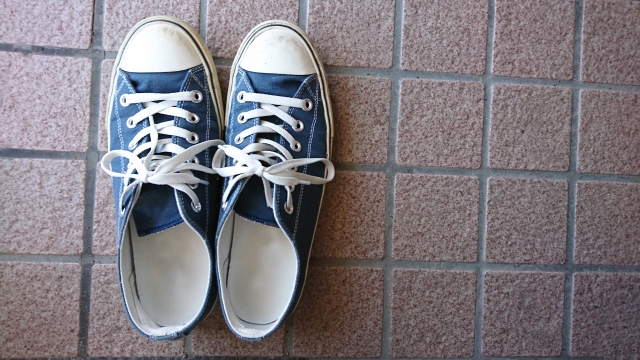
Removing shoes in Japan is often explained as a hygiene practice.
That is certainly part of it.
But the deeper meaning is about transition.
Shoes carry the outside world with them — streets, weather, dirt, movement, and public life.
Removing them at the genkan marks the point where outside ends.
Even the common habit of turning shoes neatly toward the door reflects an awareness of order, respect, and readiness for the next transition.
This is why the act can feel almost ritualistic.
Without a word being said, the body understands that something has changed.
You have left one environment and entered another.
The boundary becomes physical, behavioral, and psychological all at once.
A Mental Switch
One of the most interesting things about the genkan is how it affects the mind.
Outside the home, people are often in a kind of social mode.
They move quickly, stay alert, and respond to the demands of work, school, and public life.
Crossing the genkan often produces a subtle shift.
The pace slows.
Voices soften.
The body settles.
Many Japanese people experience this transition almost without noticing it.
The genkan functions as a switch between public self and private self.
In that sense, it does more than separate spaces.
It shapes a shift in awareness.
Protecting Interior Space
The genkan also reflects a deeper logic within Japanese home design.
Interior floors are not treated as ordinary walking surfaces.
They are living spaces.
People sit, relax, and sometimes sleep close to the floor — especially in rooms with tatami.
Because the floor plays such an important role in daily life, keeping it clean matters in a way it might not elsewhere.
This connects directly to other elements of Japanese home culture.
Fusuma shape space.
Shoji shape light.
Tatami shapes living itself.
The genkan protects the boundary that makes all of that possible.
Boundary Culture Beyond the Home
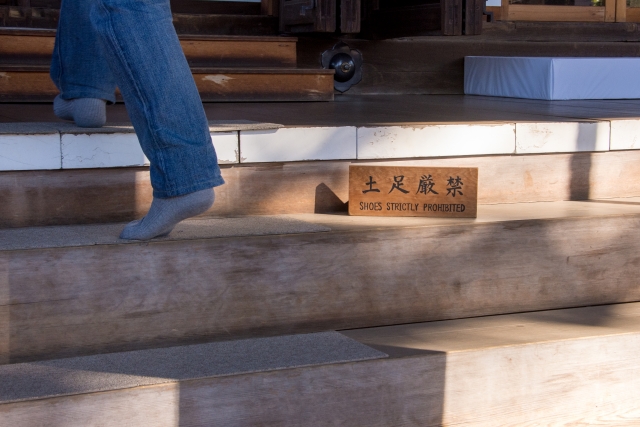
The logic of the genkan extends well beyond private homes.
Similar thresholds appear in ryokan, traditional restaurants, temples, and some studios or small shops.
Sometimes the transition is marked by a step.
Sometimes by a pair of slippers left out for visitors.
Sometimes by a simple sign asking guests to remove their shoes.
The details vary, but the underlying idea remains the same.
The boundary between outside and inside is made visible — and crossing it is made intentional.
This reflects a broader cultural preference for marking transitions through space and behavior rather than leaving them unacknowledged.
A Small Space With Large Meaning
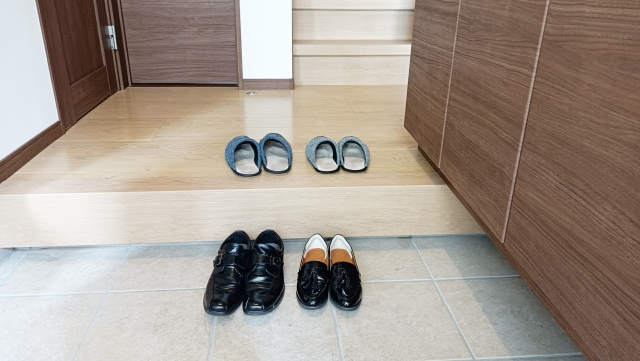
The genkan may be physically small, but its meaning runs surprisingly deep.
It represents a pause.
A quiet moment where the outside world is left behind and a different kind of living begins.
In many ways, the genkan captures something fundamental about Japanese spatial culture.
Boundaries are not always walls.
Sometimes they are rituals.
Author's Note
As a kid, I never thought of the genkan as anything special.
It was simply where shoes went.
But as an adult, I began to notice how different the home feels the moment you step up from the genkan.
It is almost as if the air changes.
Your voice lowers.
You stop rushing.
It is a small architectural detail, but it quietly shapes the rhythm of everyday life.
The genkan does not just separate spaces.
It quietly creates a pause between the outside world and the life waiting inside.
Frequently Asked Questions
What is a genkan in Japan?
A genkan is a recessed entry space that marks the boundary between outside and inside in Japanese homes.
Why do Japanese homes have a genkan?
The genkan creates a clear physical and psychological transition between the outside world and the home's interior.
Is taking off shoes in Japan only about hygiene?
No. It also functions as a ritual that marks the shift from outside to inside and shows respect for the interior space.
Why is the genkan important in Japanese homes?
It helps maintain cleanliness and order while creating a clear boundary between public and private life.
Where else can you find genkan-style entryways?
Genkan-like thresholds are common in ryokan, traditional restaurants, temples, and some studios or small shops.
What does the genkan reveal about Japanese culture?
It reflects a preference for clear boundaries, mindful transitions, and marking the separation between outside and inside through ritual and space.

