Fusuma and shoji are not just Japanese sliding doors. They are soft boundaries that shape how a home feels.
Visitors to Japan often notice that traditional Japanese rooms feel different from rooms in many Western homes.
The difference is not only the tatami flooring or the minimalist design. It is also the way space is divided.
Instead of relying on permanent walls and hinged doors, traditional Japanese homes often use sliding partitions such as fusuma and shoji.
At first glance, they can look similar. Both slide open and closed. Both help define the shape of a room.
Yet their purposes are surprisingly different.
Fusuma shape space. Shoji shape light.
Understanding that difference reveals something deeper about Japanese living: a preference for flexible spaces, soft boundaries, and a way of sharing a home without completely separating people from one another.
Part of the Japanese Home & Interior Culture cluster.
Quick Summary
- Fusuma and shoji help create flexible boundaries inside traditional Japanese homes.
- Fusuma are opaque sliding panels that shape rooms and privacy.
- Shoji are translucent paper screens that soften light and create atmosphere.
- Traditional Japanese rooms were often expected to change function throughout the day.
- Together, fusuma and shoji reflect a broader Japanese preference for connection without complete separation.
More Than a Door
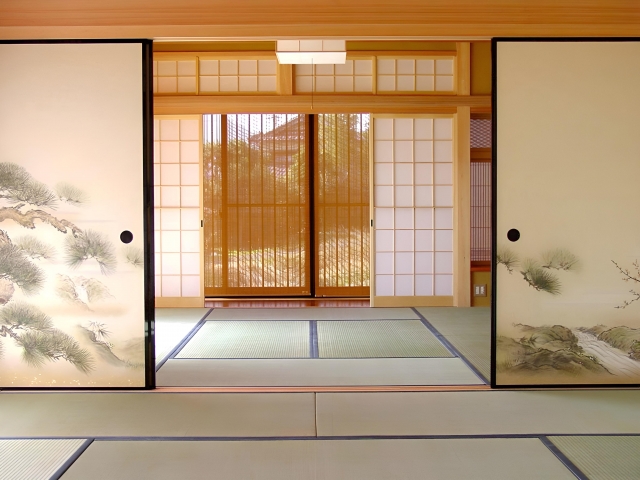
Traditional Japanese sliding doors help shape space rather than simply separate rooms.
In many homes, doors simply separate one room from another.
Traditional Japanese sliding doors often serve a different purpose. Rather than creating fixed divisions, they help adjust how space feels and functions throughout daily life.
This is why fusuma and shoji are better understood as boundaries than simply as doors. They allow rooms to remain adaptable while shaping privacy, light, and atmosphere in different ways.
Fusuma Shape Space
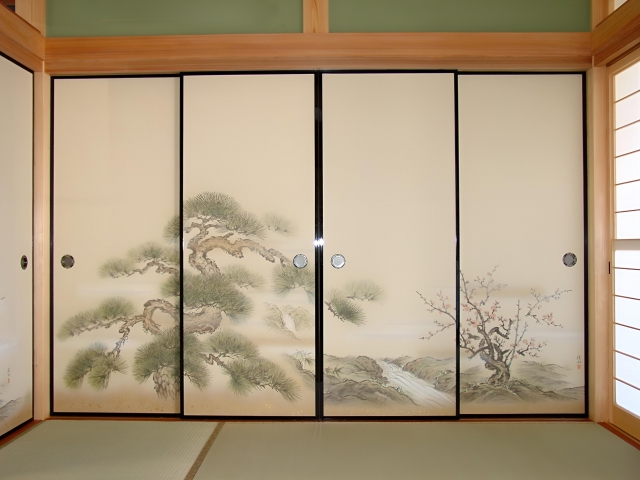
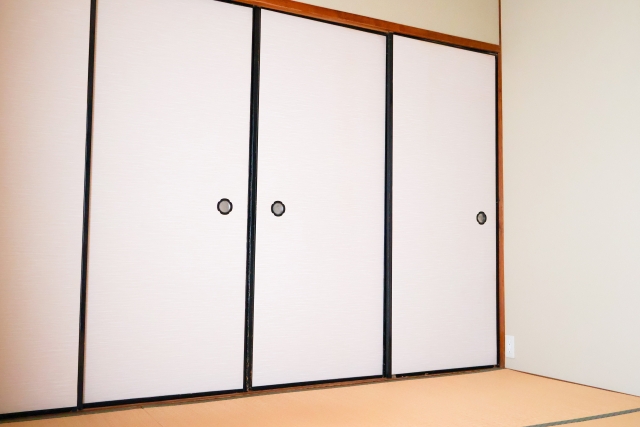
Fusuma allow rooms to expand, contract, and change function throughout the day.
Fusuma are thick, opaque sliding panels traditionally made with a wooden frame covered in paper or cloth. They are typically placed between rooms and function much like movable walls.
Because they block visibility, fusuma create a sense of privacy and separation. At the same time, they can be opened whenever more space is needed.
A room divided by fusuma in the evening can become part of a much larger shared space during the day. Family members can create quiet personal areas when needed and open those spaces back up when gathering together.
Rather than permanently dividing a home, fusuma allow the space itself to change. The boundary exists, but it remains flexible.
Shoji Shape Light
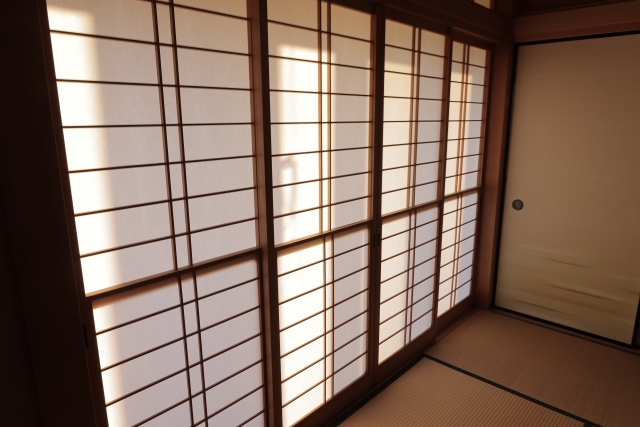
Shoji soften natural light and create one of the most recognizable atmospheres in Japanese interiors.
Shoji serve a different purpose.
Made from wooden lattice frames covered with translucent washi paper, shoji are often positioned in front of windows or openings that face a garden or veranda.
Unlike curtains or blinds, which primarily block light, shoji transform it.
Sunlight passing through the paper becomes softer and more evenly distributed across the room. This creates one of the most recognizable qualities of a traditional Japanese interior: a calm, diffused brightness.
Shoji also offer privacy, but not through complete concealment. Shapes and movement may remain faintly visible as silhouettes. A tree swaying outside in the wind, for example, might appear only as a gentle shadow on the paper — allowing people to stay aware of the world outside without bringing it fully indoors.
In this way, shoji create a boundary without creating a feeling of isolation.
A Flexible Home
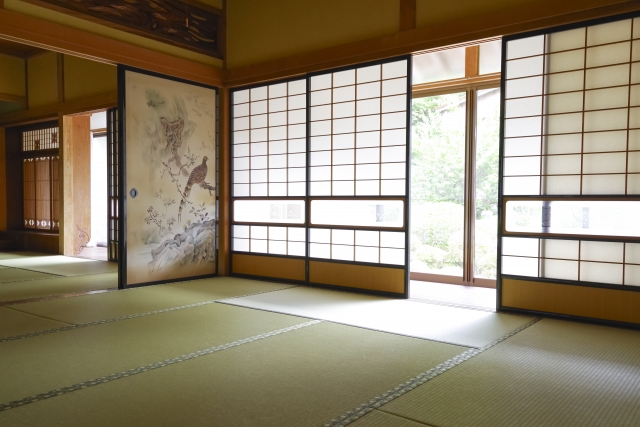
Fusuma and shoji supported a style of living where rooms could change purpose throughout the day.
To understand why fusuma and shoji became so common, it helps to look at how traditional Japanese homes were actually used.
Historically, many Japanese houses did not have highly specialized rooms with fixed purposes. Instead, spaces were expected to adapt to different needs throughout the day.
A room used for family activities in the afternoon might become a sleeping space at night. Guests could be welcomed into rooms that served other purposes at other times. When larger gatherings took place, multiple rooms could be opened and connected into a single shared space.
This flexibility was possible because the boundaries inside the home could move.
Fusuma allowed rooms to expand or contract as needed. Shoji allowed natural light to remain part of everyday life while still providing a degree of privacy and comfort.
Although many modern homes now use fixed walls and Western-style doors, the idea of adaptable living space remains an influence in Japanese housing design.
Soft Boundaries
Perhaps the most interesting thing about fusuma and shoji is what they reveal about Japanese ideas of boundaries within the home.
In many cultures, boundaries are designed primarily to separate spaces from one another. Traditional Japanese interiors often take a softer approach.
A room can feel private without being completely closed off. Family members can create a degree of distance without fully disconnecting from the rest of the household.
Shoji filter light without blocking it entirely. Fusuma divide rooms without sealing them permanently apart.
Rather than emphasizing complete separation, these features allow people to adjust the balance between openness and privacy as the situation calls for it.
In that sense, fusuma and shoji are more than architectural features. They are physical expressions of a way of living that values flexibility, balance, and quiet connection.
Author's Note
When I was growing up, fusuma and shoji felt completely ordinary.
I opened them, closed them, and rarely gave them a second thought.
Only later did I realize they had quietly been teaching a different way of thinking about space.
Rather than creating hard divisions, they allowed people to adjust their surroundings to suit the moment. A room could become more private or more open. Light could be softened rather than shut out.
Looking back, I think fusuma and shoji express something that many Japanese people rarely put into words: a boundary does not always have to be a wall. Sometimes it is enough to gently shape space, light, and distance — while still remaining connected to the people around you.
Frequently Asked Questions
Are fusuma and shoji the same thing?
No. Fusuma are opaque sliding panels used mainly between rooms, while shoji are translucent paper screens designed to soften light and provide gentle privacy.
What is the main purpose of fusuma?
Fusuma shape interior space and allow rooms to be opened or divided depending on changing needs.
What is the main purpose of shoji?
Shoji diffuse natural light while maintaining privacy and creating a calm atmosphere.
Why are fusuma and shoji important in Japanese homes?
They support flexible living by allowing spaces to change function and boundaries to stay adjustable.
Do modern Japanese homes still use them?
Many modern homes include at least one washitsu, or Japanese-style room, with fusuma or shoji, though Western-style doors and curtains are also common.
What do fusuma and shoji reveal about Japanese culture?
They reflect a preference for soft boundaries, flexible space, and staying connected without complete separation.

